Cats are remarkably good at looking fine when they’re not.
It isn’t a personality quirk; it’s biology. Because cats are both predator and prey animals, showing vulnerability has always been dangerous in the wild. A cat who appears weak gets targeted. Over thousands of years, cats evolved to mask discomfort, pain, and fear—often until a situation becomes severe. This creates a real challenge for pet owners and pet sitters alike: by the time a cat looks obviously distressed, something has usually been wrong for a while.
When a cat is stressed, sick, or in pain, their default response is to suppress external signs. They continue eating (sometimes), grooming (sometimes), and presenting a version of normalcy—right up until they can no longer maintain it.
This is why cats are so often labeled as “low maintenance.” While they don’t require daily neighborhood walks, “low maintenance” and “not suffering” are not the same thing.
Here is what stress actually looks like in cats, why it manifests, and why it matters when you leave town.
Early Signs of Stress Many People Miss
These subtle signals appear long before the obvious ones. Catching them requires a trained eye, direct observation, and spending quality time with your cat during every visit.
- Changes in Spatial Positioning: A cat who normally sleeps on the back of the couch but suddenly spends all day tucked under the bed is communicating a shift in comfort. Hiding more than usual—especially in spots your cat doesn’t normally use—is one of the earliest stress signals.
- Subtle Shifts in Grooming: Over-grooming is a well-known anxiety response, but it often starts small. A patch of fur on the belly that looks slightly thinner or a spot your cat licks repeatedly can easily be missed until a bald patch appears.
- Minor Appetite Shifts: Not a full refusal to eat, but leaving slightly more food in the bowl than usual, eating slower, or showing less excitement for favorite treats. A stressed cat’s appetite often shifts before it disappears entirely.
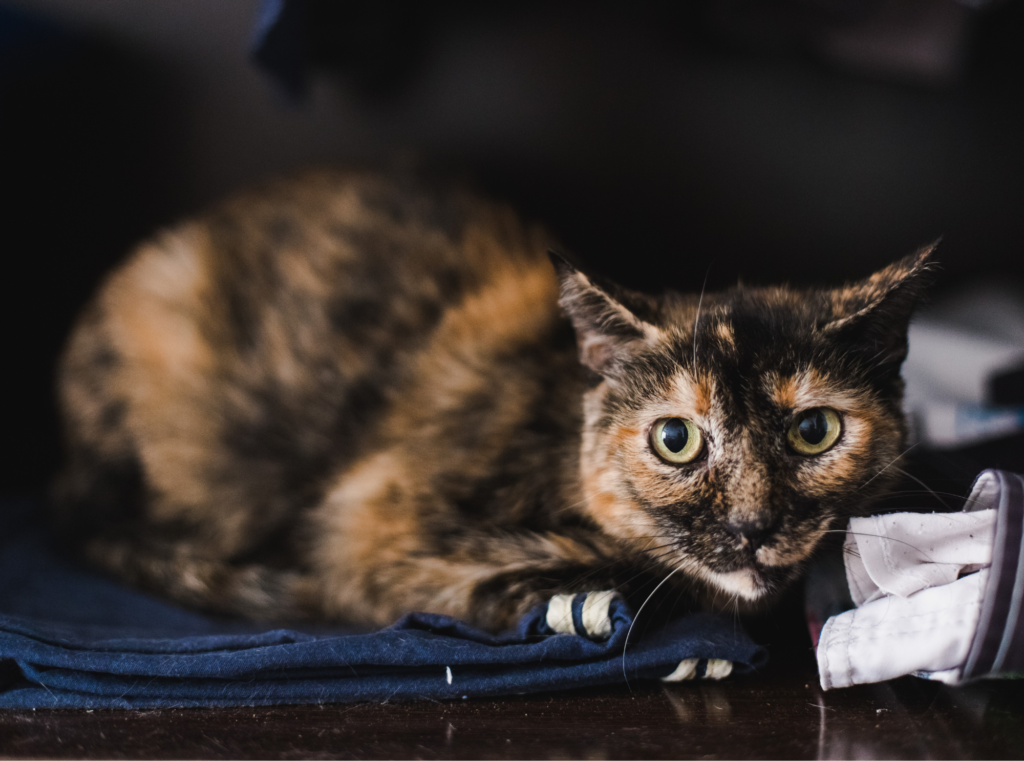
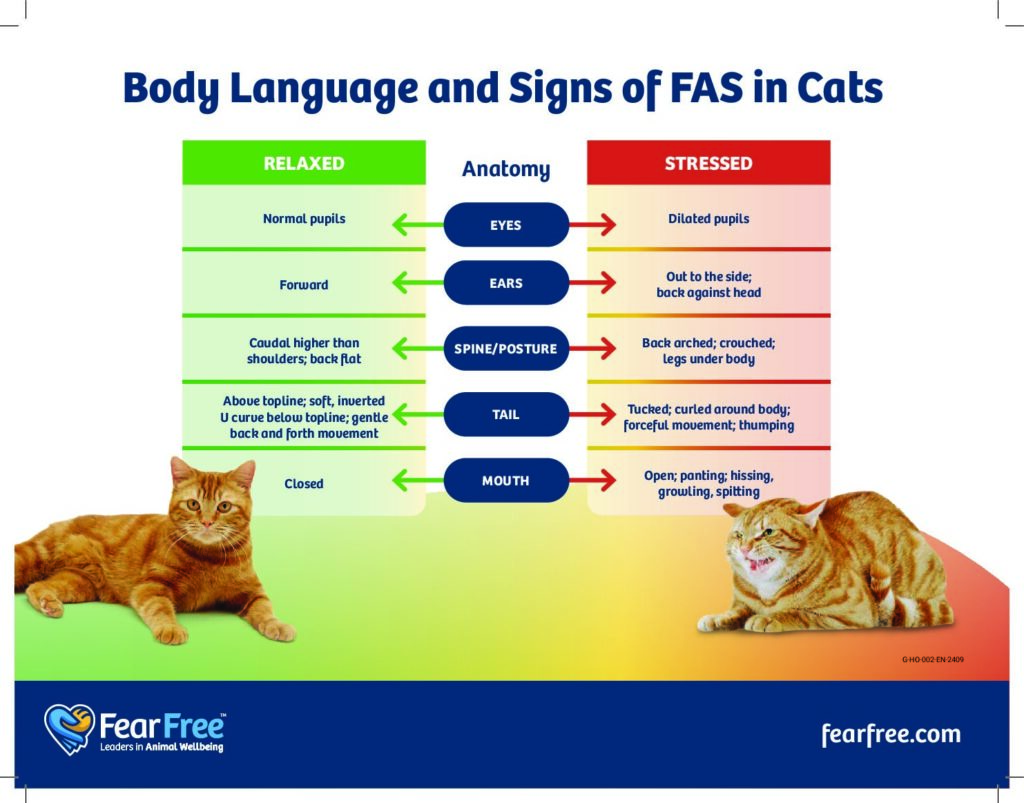
- Micro-Changes in Body Language: A tail carried low or nervously twitching at the tip, ears rotated backward or flattened into “airplane ears,” dilated pupils in normal light, or a body that tenses when touched are real-time indicators. A cat who merely tolerates touch without leaning in is communicating differently than a truly relaxed cat.
- Litter Box Habits That Seem “Almost Normal”: Going just outside the box, spending longer digging or lingering inside, or eliminating less frequently. Subtle shifts in litter box habits are some of the most reliable early stress indicators cats give us.
Signs of Significant Stress
These are the signals many pet parents eventually notice—but by the time they show up, stress has usually been building for days:
- Hiding for extended periods (hours or days) and refusing to come out for meals
- Full refusal to eat for more than 24 hours
- Excessive vocalizing, especially low-pitched howling at night
- Sudden aggression toward humans or companion pets they normally tolerate
- Repeatedly eliminating outside the litter box
- Visible over-grooming resulting in raw skin or bald patches
If a sitter sees these behaviors during a visit but lacks formal training, they might log it as “the cat seems a bit shy today” rather than recognizing a cat in need of immediate environmental adjustment or medical support.
What This Means for Your Pet Sitter
When you leave town, your cat loses their primary environmental anchor—you, your routine, and the predictability of your household. That represents a significant stress load, even for cats who seem independent.
A quick, 8-minute drop-in visit where someone simply scoops a box and fills a food bowl will miss early stress signals. There isn’t enough time or deliberate observation happening.
A Fear Free Certified sitter who spends dedicated time during every visit—watching how your cat moves, eats, interacts, and positions themselves—is actively gathering behavioral data. They establish what “normal” looks like during the initial Registration Meeting and notice when something shifts.
That distinction is vital for senior cats, pets with chronic health conditions (like diabetes or kidney disease), and anxious felines. But it matters for every cat, because the earlier a stress response is identified, the easier it is to address.
At Calico Pet Sitting, Ltd., we are Fear Free™ Certified. This means we are specifically trained to recognize the early, subtle signals of fear, anxiety, and stress (FAS) in cats. It is one of the most practical things that separates a certified professional from someone who is simply “good with animals.”
What Fear Free™ Certification Actually Means
Fear Free is an industry-standard training and certification program developed by board-certified veterinary behaviorists and animal welfare experts. It addresses the reality that fear, anxiety, and stress in animals are frequently under-recognized.
At Calico Pet Sitting, Ltd., our Fear Free certified team is trained to:
- Recognize Behavioral FAS Signals: Identify subtle species-specific signals across green, yellow, and red stress scales.
- Modify Handling Approaches: Adjust how we enter your home, lower our vocal tones, avoid direct eye contact, and respect a cat’s personal space using the “Touch Gradient.”
- Differentiate Shyness from Distress: Accurately evaluate whether a cat is naturally reserved or experiencing physical/emotional distress.
- Document & Track Observations: Provide detailed digital updates via Time to Pet, ensuring you and your veterinarian have accurate behavioral records.
Practical Information to Share with Your Sitter
Whether you rely on Calico Pet Sitting, Ltd. or another professional service, providing detailed baseline context helps us protect your cat.
Key details to share include:
- Where your cat typically sleeps, hides, or lounges during different times of day
- How long it normally takes them to warm up to new people
- Normal eating schedules, favorite food textures, and litter box habits
- Specific stress triggers (e.g., vacuum sounds, doorbells, stormy weather, handling restrictions)
- How they have historically behaved during past trips away
We collect this information during our in-person Registration Meeting. It isn’t just a formality—it creates the baseline we use to keep your pet safe and comfortable.
Frequently Asked Questions
How do I know if my cat is stressed while I’m away?
Because cats mask anxiety in real time, detailed updates from a certified pet sitter are your best window into their well-being. Upon your return, watch for behavioral changes such as hiding, litter box accidents, changes in appetite, or unusual clinginess/aggression.
What causes cats to become stressed when owners travel?
The primary triggers are disruptions to their daily routine, loss of their owner’s presence (cats form strong emotional bonds with their families), and environmental changes such as unfamiliar visitor scents or unpredictable visit timing.
Can a cat get sick from stress?
Yes. Sustained stress suppresses a cat’s immune system and can trigger or exacerbate physical health conditions—most notably Feline Lower Urinary Tract Disease (FLUTD), feline idiopathic cystitis, upper respiratory infections, and gastrointestinal distress.
What is Fear Free™ certification for pet sitters?
Fear Free is a professional certification program developed by veterinarians and animal behaviorists. It arms pet care professionals with evidence-based techniques to prevent and alleviate fear, anxiety, and stress in pets through low-stress handling and environmental management.
How do I hire a Fear Free™ certified cat sitter in Highlands Ranch?
Calico Pet Sitting, Ltd. provides Fear Free certified, professional in-home pet care across Highlands Ranch, Littleton, Centennial, Greenwood Village, Cherry Hills Village, and Lone Tree, Colorado. You can also search for certified individual professionals via the official directory at fearfreepets.com.
About Calico Pet Sitting, Ltd.
Calico Pet Sitting, Ltd. is a fully insured, bonded, and Fear Free™ Certified professional dog walking and pet sitting company serving Highlands Ranch and the South Denver Metro area. Our staff is trained in Pet First Aid & CPR and specialized animal behavior to ensure transparent, high-quality care for your home and pets.
Ready to set up low-stress care for your cat? Contact us today!